
What’s the difference between sweet potatoes and yams? It seems like one of those age-old questions, kind like “which came first, the chicken or the egg?” The more relevant question this time of year might be “What’s on my Thanksgiving table? Sweet potatoes or yams?”
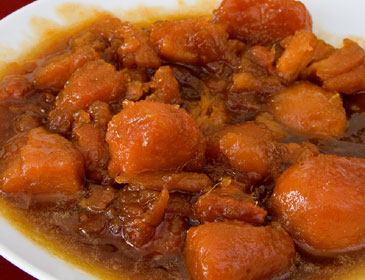
| Candied "yams" |
Sweet potato pie, candied yams, mashed sweet potatoes, sweet potato soufflé, roasted yams…they all kind of taste the same, don’t they? When you go to the grocery store, do you look for sweet potatoes or yams? If your recipe calls for sweet potatoes but you can only find garnet yams or jewel yams, what do you do? Do you scrap the recipe or do you “substitute” the yams for the sweet potato?
Well when it comes to the sweet potato and yam side dishes and desserts we typically think of, it really makes no difference. The sweet potatoes and yams you see in a regular grocery store are really just different varieties of the same sweet vegetable: they are all sweet potatoes. In fact, the term “sweet potato yam” really should be called “yam sweet potato”.
No. Yams are not just varieties of sweet potatoes. True yams are actually a completely different category of vegetable and have no relation to potatoes or sweet potatoes.
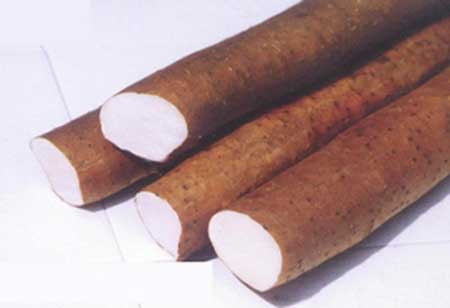
| Chinese yams |
When you see the term “Chinese yam” or “wild yam”, these are actually referring to this different type of yam which is in the Dioscoreae family. This family has about 200 different varieties, which are different sizes and colors, and they are native to Africa, Asia, and can also be found in the tropical regions of North and South America. Like sweet potatoes, the flesh may range in color from white, ivory, or yellow to purple. But unlike sweet potatoes, a yam has a thick, rough, scaly (even sometimes “hairy” skin which can be white, pink or brownish-black. Their shape is long and cylindrical (oftentimes having offshoots referred to as "toes"), and they can grow to be several feet long.
Yams have played a central role in the diets of many different countries for thousands of years. They are used in stir fry and roasted vegetable dishes, and have an earthy NOT too sweet taste. Yams have several health benefits and contain many nutrients such as Vitamin C, Vitamin B6, fiber, and potassium. They also contain a storage protein called Discorin, which may benefit those with certain cardiovascular issues.
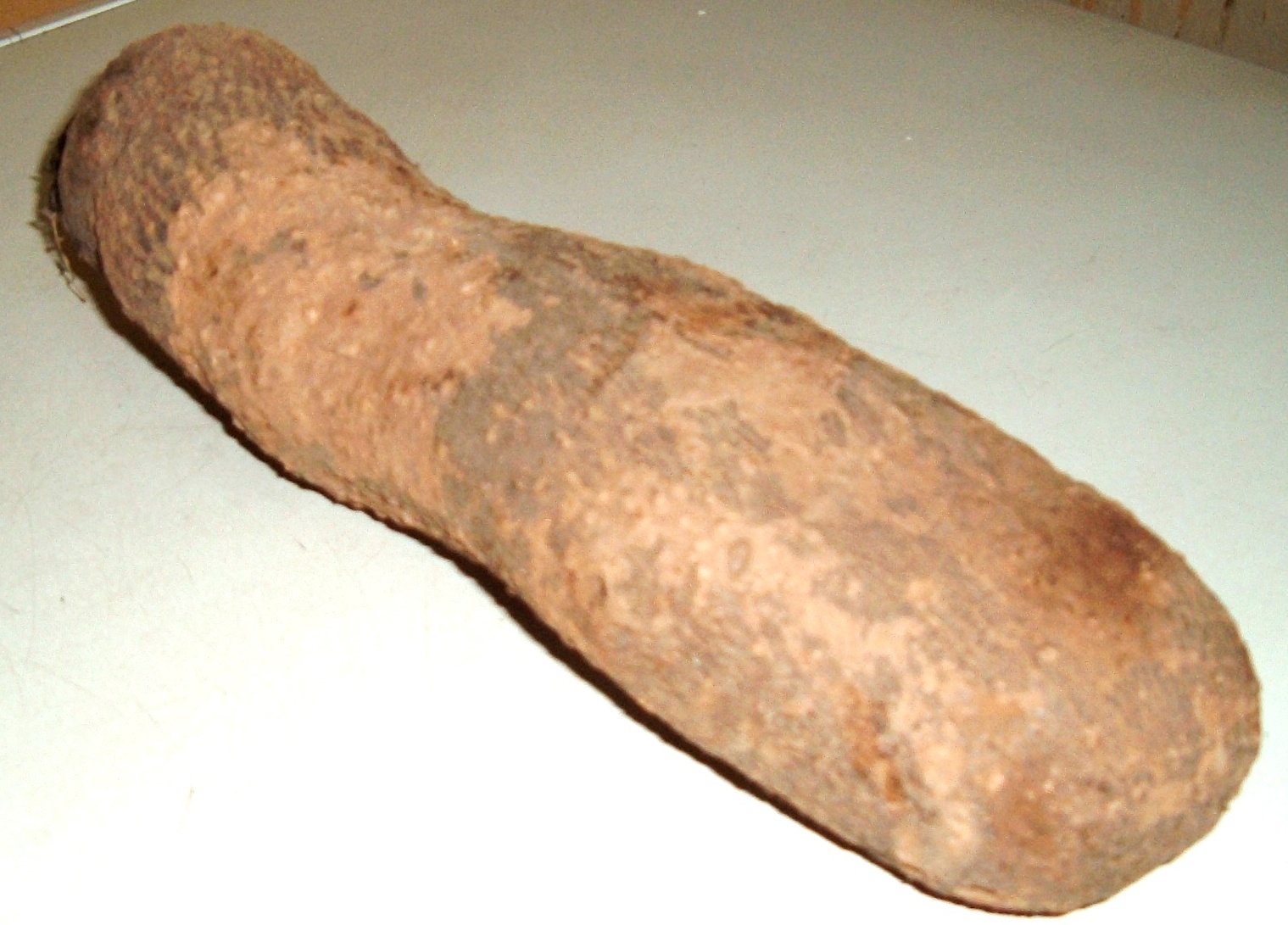 |
| Another variety of yam |
Wild yams and wild yam extract are also considered by many alternative or herbal healing practitioners to help balance out a woman’s hormones and relieve symptoms during menopause. I’m not going to delve into this topic here since it is a lengthy and somewhat controversial one…we’ll save that for another post. However, I will note that like many other natural remedies, Western medicine has funded and published many studies refuting any claims of hormonal activity in wild yams. News flash, I know. Even though women in certain cultures in other parts of the world have managed their symptoms using it for thousands of years.
Many of this “research” even warns that consuming wild yam or wild yam extract can even cause harm (if taken while the woman is already taking a pharmaceutical synthetic hormone prescription, of course). If you are someone looking to manage symptoms of menopause or other hormonal imbalances I highly recommend that you do your own research on both sides of the “story” and see what makes sense to you. Talk to a couple of different healthcare providers from different modalities about it and get different perspectives. It is your decision whether to add hormones or possible hormone precursors to your regimen or not…make sure it is an informed one. Additionally, many of the wild yam creams and supplements do also contain other synthetic hormones and chemicals, so be wary of that when making your decision.
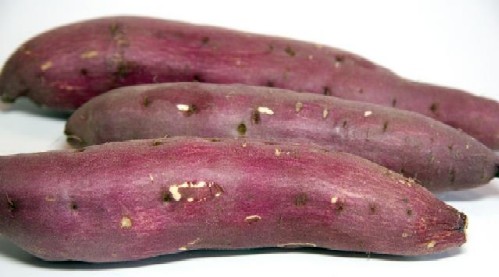
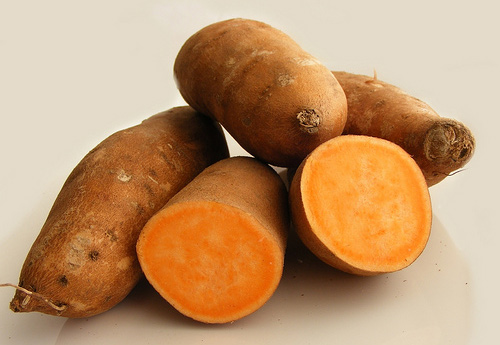
| Sweet potatoes! |
Sweet potatoes, on the other hand are members of the Convolvulaceae family (FYI, neither sweet potatoes nor yams are related to common potatoes, which are in the Solanaceae family). There are approximately 400 different varieties of sweet potatoes! Some may look like common potatoes on the outside, some may be much larger with smooth skin and tapered ends. “The flesh of the sweet potato may be almost white, cream, yellow, orange, pink, or deep purple, although white/cream and yellow-orange flesh are most common.”
Sweet potatoes are healthy to eat year 'round, not just for the holidays, if they are prepared in a healthy way. I never understood the reason for “candied” sweet potatoes or yams…they are sweet enough as it is! There is no need to add any form of sugar to make them taste delicious. Sweet potatoes are a very anti-inflammatory and antioxidant-rich food. They contain anthocyanins and beta-carotene (bioavailable source of Vitamin A), as well as important storage proteins called sporamins, and naturally occuring antifungal and antibacterial properties which help the plants heal themselves and boost our immune systems. If you are a person with sugar cravings, try eating sautéed or roasted sweet potatoes more often and see if your cravings decrease. They also are known to help control blood sugar. Research continues to reveal more specific anti-inflammatory benefits…it is a very healthy food.
Since sweet potatoes and yams are clearly two very different and unrelated foods, why are they even associated with each other?
| More sweet potatoes! |
“When the moist-fleshed orange-colored sweet potato was introduced into the United States in the mid-20th century, producers wanted to distinguish it from the white-fleshed sweet potato that most people were used to. They adopted the word ‘yam’ from nyami, the African word for the root of the Dioscoreae genus of plants. While there are attempts to distinguish between the two, such as the U.S. Deparment of Agriculture's labeling requirement that the moist-fleshed, orange-colored sweet potatoes that are labeled as ‘yams’ also be accompanied by the label ‘sweet potato’, for many people this does not help to clarify the distinction between the two very different root vegetables.”
True yams aren’t even widely available in most parts of the United States; you’d have to go to a very specialized health food or African/South American/Asian specialty store to find them.
So go ahead and enjoy the many beautiful and delicious varieties of sweet potatoes not just this Thanksgiving, but all year ‘round. I’ll have a yummy NOT candied redone sweet potato recipe for you tomorrow.
*Image 1 from The Global Perspective; image 2 from MadeinChina.com; image 3 from IMDiversity.com; image 4 from Chocolate Cake Party. Image 5 from WFAEats.org.

Comments
Post new comment